The campaign · Led by founder Matt Ricchiazzi
Make It Hard Again.
Buffalo has spent its savings and its federal relief, and homeowners are paying for it with a 19 percent tax-levy increase. We are calling on the Governor of New York to help put the control board back in charge until the City’s books are whole.
#MakeItHardAgain
By the numbers
$103M
Structural deficit in the City’s 2026-27 general fund, per the State Comptroller
$0
Unassigned fund balance at the City’s audited June 30, 2025 results, per the control board
19%
Property-tax levy increase in this year’s budget, with 10% more projected next year in the City’s revised plan

Change Buffalo PAC · Building tomorrow, today.
Buffalo built America once. We can build it again.
The comeback is real. Now it has to become a boom. Change Buffalo PAC is advancing a pro-growth Turnaround Agenda for the city, the counties and the whole Buffalo-Niagara region.
Our Story in Four Chapters
From the world’s grain port to a city on the rise
Buffalo’s story is one of ambition, loss and renewal. Each chapter points to the same lesson: when this region builds boldly, it leads the nation. Read the full story.
Chapter One
The Rise
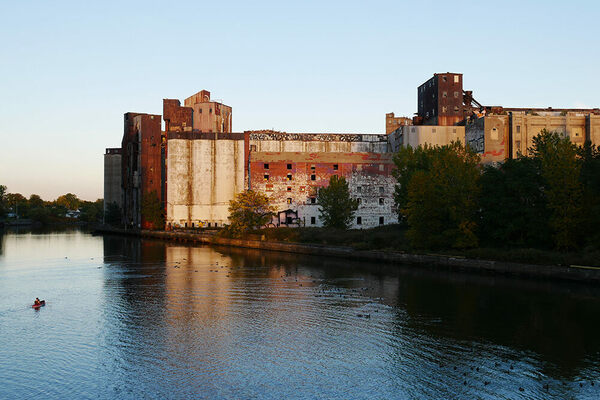
In 1825 the Erie Canal opened with Buffalo as its western terminus, and a frontier village became the hinge between the Great Lakes and the Atlantic. In 1843 the steam-powered grain elevator was invented here, and Buffalo became the largest grain port in the world.
Railroads, steel and Niagara hydropower followed. Olmsted and Vaux gave the city its parks and parkways. By 1950 Buffalo had 580,132 residents and was the fifteenth-largest city in the United States.
Chapter Two
The Long Decline
Then the world changed faster than Buffalo did. The St. Lawrence Seaway opened in 1959 and ships no longer needed our port. Bethlehem Steel closed its Lackawanna plant in 1983. The region lost at least 70,000 jobs between 1970 and 1984.
Choices made it worse. Expressways were driven through Olmsted’s parkways, and for six straight decades every census counted fewer Buffalonians than the one before.

Chapter Three
The Comeback
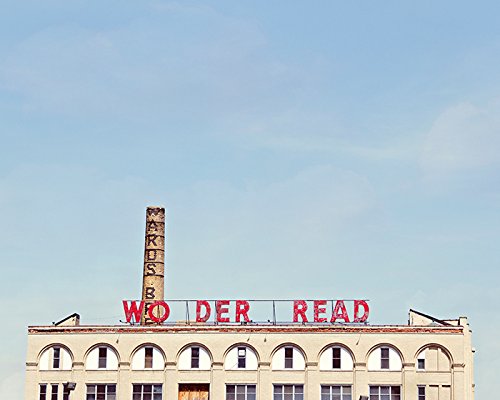
Buffalo never stopped believing in itself. Canalside rose on the old canal terminus. The 2017 Green Code made Buffalo the first major U.S. city to end minimum parking requirements citywide. Grain silos became venues and warehouses became lofts.
Then came the proof: the 2020 census found Buffalo had grown 6.5 percent, to 278,349 residents, its first population gain in seventy years.
Chapter Four
The Leadership Void
A comeback is not the same as a boom. The recovery is real, but it is uneven and fragile, and too many big decisions are still stuck.
Erie County alone has 44 cities, towns and villages, plus separate agencies, authorities and districts. No single institution has set a bold, shared direction for the whole region and built the public support to carry it out. That is the void Change Buffalo PAC was created to fill.

1825
The Erie Canal opens with Buffalo as its western terminus
580,132
Buffalo residents in 1950, the nation’s 15th-largest city
70,000+
Regional jobs lost between 1970 and 1984
+6.5%
Population growth in the 2020 census, the first gain in 70 years
The Next Chapter
The Turnaround Agenda
A pro-growth, pro-market, low-tax, pro-neighborhood and pro-democracy plan to revive the regional economy at every level of government.
City of Buffalo
A City That Builds
More homes, faster permits, vacant land back to work, a disciplined budget and real neighborhood power.
Erie & Niagara Counties
Leaner, Fairer, Faster
Shared services, one accountable IDA, tax relief and a faster land bank.
Buffalo-Niagara Region
One Region, One Economy
Regional transit, a reconnected city, a public waterfront and a cross-border economy.
Citizen Power
Citizen Power
Open elections, open data, participatory budgeting and neighborhood councils.
Putting the Plan to Work
Our Initiatives
Policy, advocacy, organizing and reform: the four ways we move the Turnaround Agenda from paper to practice.
Policy Initiatives
Build Buffalo Homes, the Permit Clock, Lots to Neighbors, One Region One IDA and more.
Advocacy Campaigns
Restore Humboldt Parkway, Reconnect Delaware Park, Reform Before Renewal, Open the Books.
Organizing
Neighborhood Captains, working groups, civic leadership and listening projects.
Local Legislative & Reform Initiatives
Model local laws, charter amendments, and ballot and transparency reforms.
Transformative Projects
Reclaim the waterfront. Reconnect the city.
From the Outer Harbor to Humboldt Parkway, our development plans would reclaim the waterfront, reconnect neighborhoods divided by highways, and bring downtown back to life.

Committee Reports
What’s happening, and what it means
Our Committee Reports break down the news that matters to Buffalo Niagara: the facts with sources, what each development means for the Turnaround Agenda, and the hearings, deadlines and actions where members can make a difference.
- Two Campaigns, One Question: What Is Your Plan for Western New York’s Economy?A nonpartisan request to both campaigns for governor: publish a specific economic plan for Western New York. Our questions on housing, permitting, the sales and property taxes, Metro Rail and Route 33, and economic development reform.
- Rules, Not Bans: A Smarter Approach to Data Centers in Western New YorkWest Seneca has paused data centers for a year, Hamburg holds a hearing October 19, and Buffalo’s two-year moratorium still needs a local law. Why clear siting rules, brownfields first and written community benefits beat blanket bans.
- Last in New Businesses, 13th in New Homes: Our Answer to the Prosperity ReportThe Partnership’s Prosperity Report ranks Buffalo Niagara last of 13 peer metros in business formation and home building while wages fell. Here is how Build Buffalo Homes, the Permit Clock, Lots to Neighbors and One Region, One IDA answer it.
The Monthly Newsletter
Get the Monthly Newsletter
Agenda updates, Committee Reports and ways to act, once a month. Learn more or subscribe below.
Join the Turnaround
Buffalo has been the future once before. It can be again.
Volunteer, organize your neighborhood, fund the work, or tell us what you think. Every turnaround starts with people who decide to show up.
Our Founder
Founded in 2009 by Matthew Ricchiazzi
Matthew Ricchiazzi founded Change Buffalo in 2009. The non-partisan committee, made up of Western New York civic leaders, serves as a forum for innovation in state and municipal policy, urban design and civic advancement. Ricchiazzi holds a B.S. in Urban and Regional Studies and an MBA from Cornell University, and in 2007 was a Public Policy and International Affairs Fellow at Princeton University.
Our Inheritance
A region worth building for
City Hall, Olmsted’s parks, Silo City, the falls and the fort: the landmarks that remind us what Buffalo Niagara has built before.